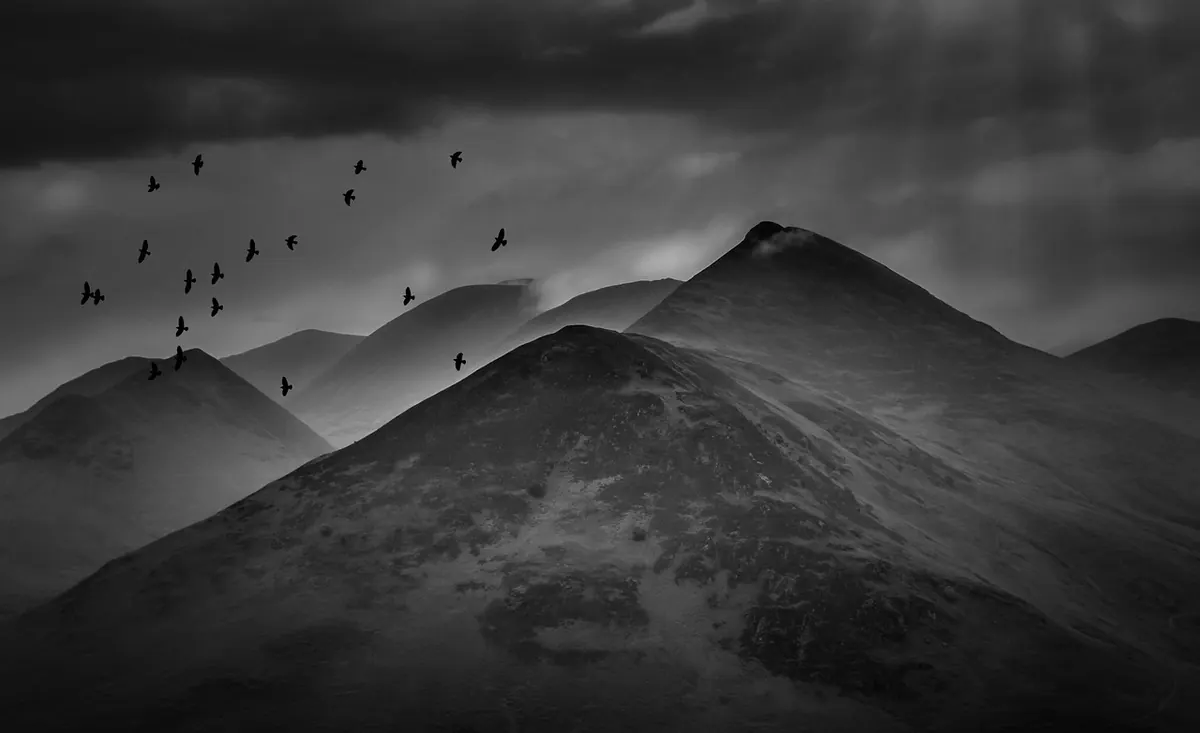
Fog is the Lake District's quietest gift to photographers. On a still morning in late autumn the fells step back into layers, the car parks vanish, and a jetty you have walked past a dozen times becomes the whole picture. The trick is knowing where to stand, when to set the alarm, and how to expose for a scene that is mostly white. None of it needs a long walk or an expensive filter.
Three things work in your favour. The valleys radiate from a central mass of high ground, so cold air drains downhill and pools over water; there is a lake or tarn at the bottom of almost every one of them; and autumn and winter bring the still, clear nights that let radiation fog form. Damp ground after rain helps, as does a light breeze rather than a gale.
The other half of the story is the inversion. When cold air sits in the valleys and warmer air stays above it, you can climb a modest fell and look down on a sea of cloud with island peaks. Buttermere, Borrowdale, Great Langdale, the Troutbeck valley and the Windermere basin are all dependable places to find low mist. The higher fells are where you go to escape it.
It pays to know which kind of murk you are dealing with. Radiation fog is the good stuff: it forms overnight under clear skies, sits low and level over the water, and lifts cleanly a few hours after sunrise. Hill fog is cloud that has swallowed the summits and can sit there for days, flattening everything in front of and behind it. Frontal murk — the grey, drizzly haze that arrives with a warm front — rarely gives you anything but a grey rectangle and wet kit. Wait for the first kind and you will come home with pictures; the other two are for recce walks and café stops.
Fog forecasts are imperfect, so look for the conditions rather than a promise. The signals worth watching are:
Check the Met Office mountain forecast and the valley webcams at Windermere and Keswick the night before, then look out of the window. Mist tends to be thickest just before and around sunrise and starts to break up as the sun warms the valley floor, often between 9am and 11am — later in deep, shaded valleys such as Buttermere. Winter adds a bonus: a low sun through bare trees gives you light shafts, and the mist can linger well into the afternoon.
Wind direction matters more than most people expect. A light easterly often keeps the western valleys clearer while Borrowdale and the Keswick basin fill up; a northerly tends to clear the air and give you sharp, cold views instead. If you only have one morning, pick a valley with water at the bottom and a fell on at least one side to hold the cold air in, then commit to it rather than driving around the county chasing a better forecast.
Access matters when you are setting off in the dark, and plenty of the best fog locations are a short, level walk from a car park.
Friar's Crag is about fifteen minutes on foot from Keswick's lakeshore and looks straight down Derwentwater towards Catbells and the jaws of Borrowdale, which is where the mist usually sits. Continue up the lane to Ashness Jetty for the classic view of Skiddaw over the water, with Ashness Bridge a little further on. The lane is narrow and parking is limited, so arrive early and keep the road clear.
Two more close to town. Castlerigg Stone Circle, a short drive or a steepish walk from Keswick, turns a ring of stones into something far older than any wide view. And Latrigg has a car park almost at the top and a bench looking straight down the length of Derwentwater, so on an inversion morning you can be above the cloud in twenty minutes.
The northern end of Buttermere is the one to aim for: pines, a shingle shore, and mist drifting across the water towards Fleetwith Pike. The path along the north shore is easy for the first stretch, with room to stop and set up. The footbridge at the outflow, where Buttermere spills into Crummock Water, is a natural tripod spot, and from there you can walk south along Crummock's shore to the little pebble beaches below Rannerdale. The pines at Hassness, on the south side of Buttermere, are a favourite of anyone who likes shapes rather than views — trunks dissolving into the white one behind another.
Tarn Hows is the easiest big payoff in the Lakes: a National Trust car park, a level circuit of about a mile, and larch and pine around black water that holds mist beautifully. Nearby Esthwaite Water, seen from the lanes above Hawkshead, is one of the most reliable fog traps in the south. On Windermere itself, the jetties and boathouses along the western shore give you the foreground detail a flat white lake needs, and the ferry crossings still run, so you can photograph the mist from the water.
Blea Tarn sits above the Langdale valley and is a ten-minute walk from the small car park on the Little Langdale road. It is the classic inversion viewpoint in the south, with the Langdale Pikes rising out of the valley cloud, and because you are already high you are often above the worst of the murk. The valley floor around Chapel Stile and the New Dungeon Ghyll is worth a look on the way down.
Your camera wants to turn fog into grey. It meters the scene, assumes it is an average mid-tone, and underexposes anything bright, so the first thing to do is add exposure — usually +1 to +2 stops — and check the histogram rather than the back-of-camera preview. For fog you want the main peak sitting centre-right, with nothing jammed against the right edge.
A few more habits that help:
If the far shore is still sharp, the fog is already lifting. Once the distance starts to dissolve, work quickly — the best ten minutes of a foggy morning are rarely the first ten.
White balance is a matter of taste. Auto usually goes cool and blue in fog, which suits a wintry feel; a slightly warmer setting brings back the sepia mood of sunrise mist. Either way, choose it deliberately or set it in the raw file afterwards, rather than letting the camera decide for you.
The Lakes in fog is a wet, cold, dark place to be standing around, and comfort is what keeps you out long enough to get the picture.
Two things to remember about where you park. Narrow lanes such as the one to Ashness Bridge and the road to Blea Tarn have almost no passing places, so use the car parks and never block a gate, a passing place or a farm entrance. And tell someone where you are going, even for a twenty-minute walk. Visibility can drop to a few metres in minutes, paths beside water are slippier than they look, and the mountain rescue teams are volunteers who would rather not be out looking for a photographer who left the route card on the kitchen table.
Get the timing right and none of it feels like effort. You will be standing somewhere you know well, watching a familiar landscape turn into something you have never seen before, and the whole thing will cost you a flask of coffee and an early alarm.
Photo: JordanStimpson / Pixabay
A practical packing guide for nature photographers heading into the British outdoors, covering cameras, lenses, rain...
A practical guide to photographing Britain's spring wildflowers: reading the bluebell season, working with soft...
How to expose for snow and frost, protect your kit in the cold, and find strong compositions when winter light lasts...

Exploring misty landscapes and quiet natural places.
