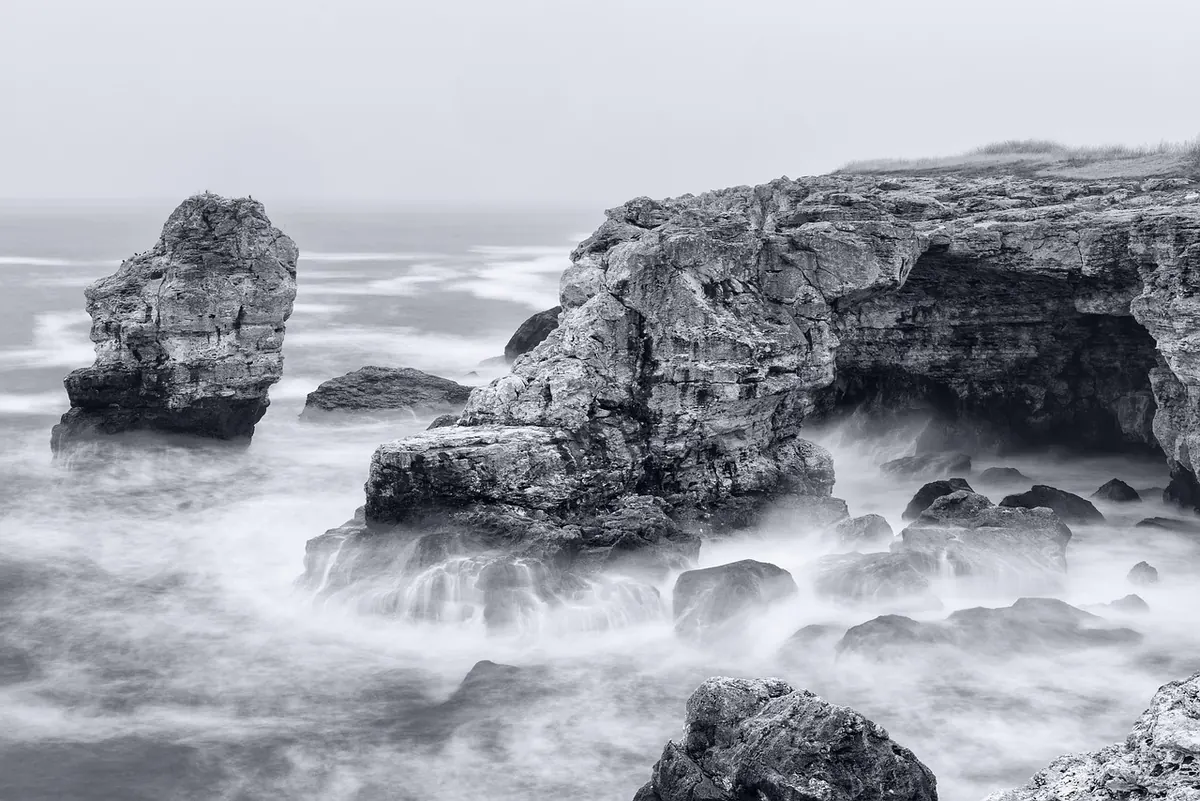
Coastal mist and inland fog photograph much the same — soft edges, muted colour, shapes reduced to layers — but they arrive for completely different reasons and behave nothing alike. One is carried in off the sea on the wind and can vanish in twenty minutes. The other pools in a valley overnight and lifts when the sun reaches it. Knowing which you're walking into changes where you go, what you carry and how long you have to work.
Coastal mist, called sea fret on the east coast and haar in the north-east of Scotland, is made at sea. Warm, moist air drifts over a colder sea surface and cools from below until the moisture condenses. In Britain it's most likely from late spring into early summer, when the land warms faster than the water, and it comes ashore on an onshore wind. It arrives in banks — sometimes wall-high, sometimes a thin band lying along the horizon.
Inland fog is made on land, at night. Clear skies, light winds and damp ground let the surface cool quickly, chilling the air just above it. Radiation fog forms in hollows first: river valleys, low farmland, the dip at the end of a lane. It's commonest from October through to March and is usually at its thickest half an hour before sunrise.
That difference in origin is the whole game. A sea fret can be there at eleven in the morning and gone by two. Valley fog is a dawn event, and you can often predict it from the forecast the night before.
Both conditions diffuse sunlight, but they do it differently, and the pictures look different because of it.
Coastal mist over water gives you low contrast and a cool, pastel palette — greys, soft blues, hints of pink at either end of the day. The sun becomes a pale disc rather than a source of rays. Long exposures turn the sea to milk and simplify everything: a boat, a post, a headland, nothing else. It suits quiet, minimal frames, and it's forgiving of a busy harbour because distance drops away into nothing.
Inland fog is the better beam-maker. When the sun is low and roughly behind your subject, light shafts appear through trees, rim-lighting branches and backlighting frost. Contrast is higher because you usually have a dark foreground to work against. The classic shot — a ridge line above a sea of fog, or a single tree in a field — depends on that structure. Side light through trees is often better than straight backlight, which can flatten the trunks.
Fog fools meters. A camera metering a bright white scene will try to make it grey, so add exposure — often a stop, sometimes more — and check the histogram. Keep the brightest fog just short of clipping; once it's blown, there's nothing to bring back.
A few habits pay off in both conditions:
On the coast, check tide times before you commit to a rock platform, and remember that mist hides cliff edges from you as much as it hides you from other people. Carry a torch, keep a bearing, and tell someone where you're going. Inland, fog and frost make lanes and verges genuinely dangerous for drivers, so park somewhere safe and walk in.
For coastal mist, look at wind direction and the difference between sea and air temperature. An onshore breeze in late spring or early summer, with warm air over cold water, is the setup you want. Webcams along the coast are more useful than any forecast.
For inland fog, look for a clear night, light winds, high pressure and damp ground after rain. River valleys and flat farmland are your best bets, and the coldest, stillest hour is just before sunrise. Arrive in the dark and be set up before the light comes.
If you have one morning free and both options are within reach, the decision usually comes down to travel time and how quickly the light will change. Coastal mist rewards patience and can last for hours; inland fog rewards punctuality and is often over within ninety minutes of sunrise. Pick according to the forecast you trust most, take the kit that suits the distance, and don't chase a second location once the fog starts thinning. The best frame is almost always the one in front of you.
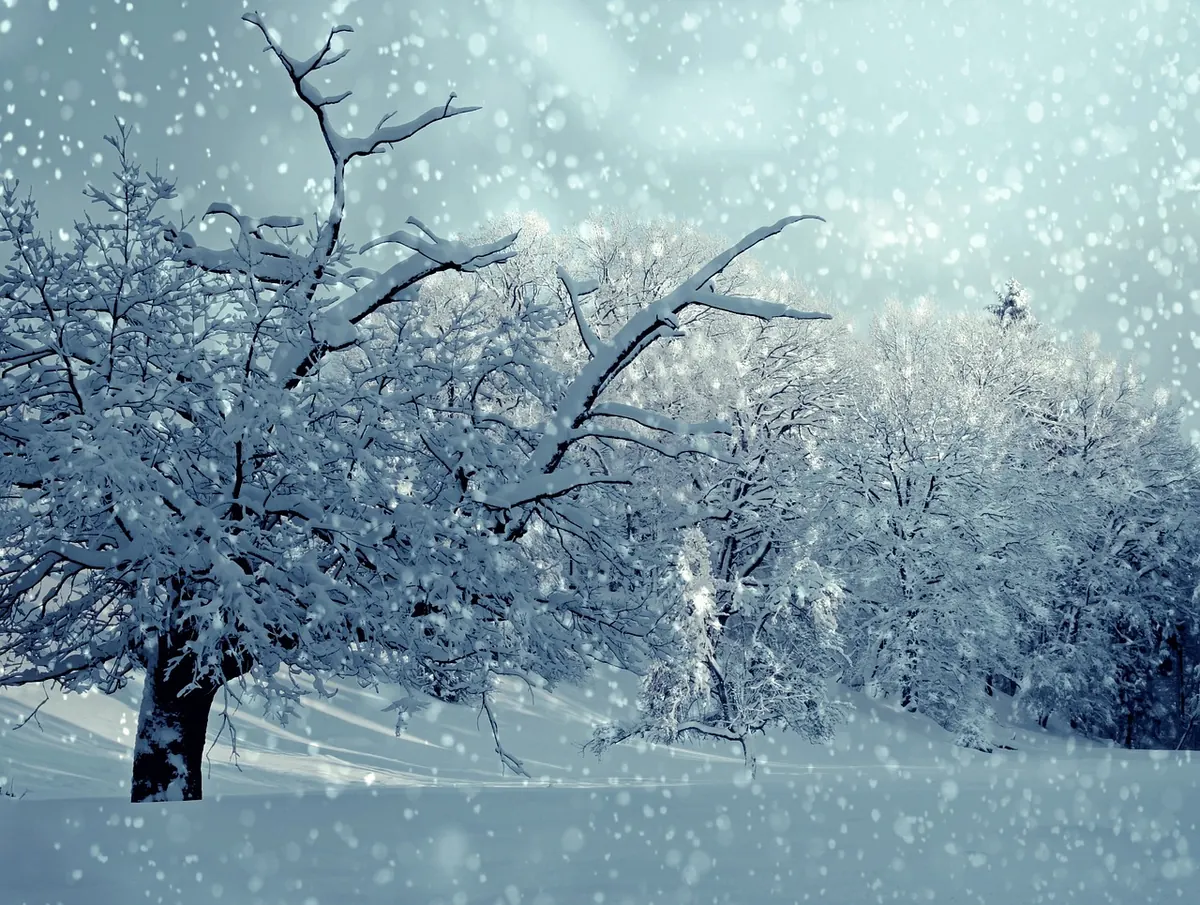
Photo: nikidinov / Pixabay
A practical packing guide for nature photographers heading into the British outdoors, covering cameras, lenses, rain...
How to find, time and photograph Lake District fog — accessible viewpoints from Buttermere to Tarn Hows, exposure...
A practical guide to photographing Britain's spring wildflowers: reading the bluebell season, working with soft...

Exploring misty landscapes and quiet natural places.
